
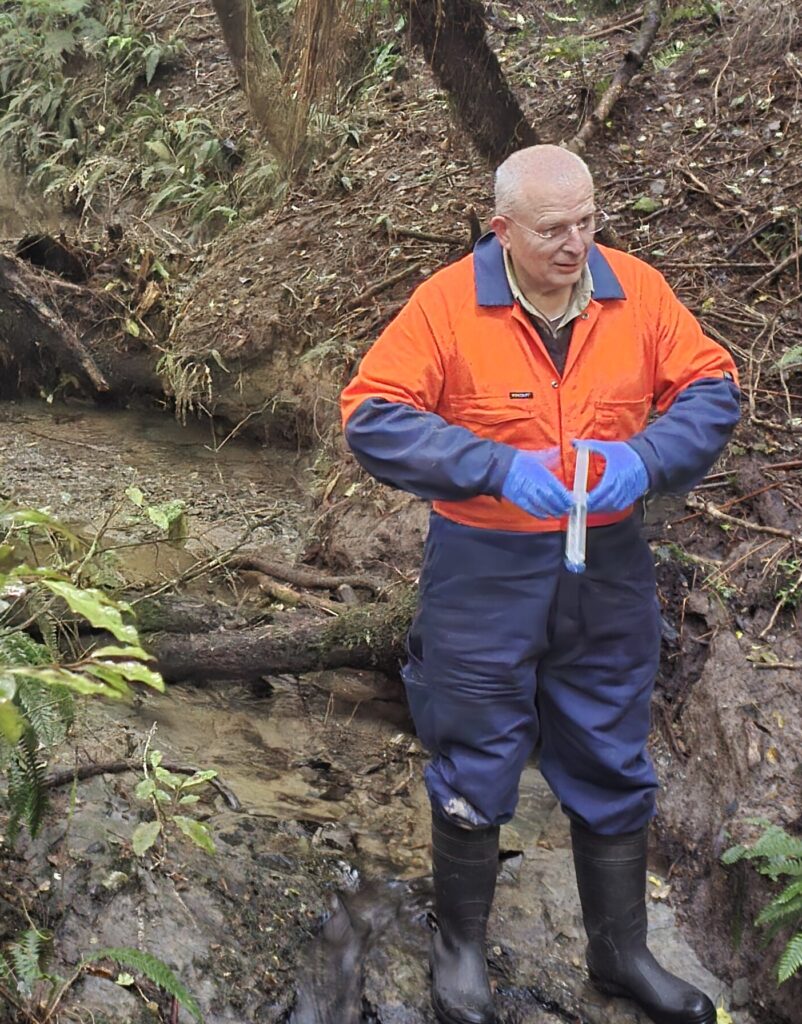
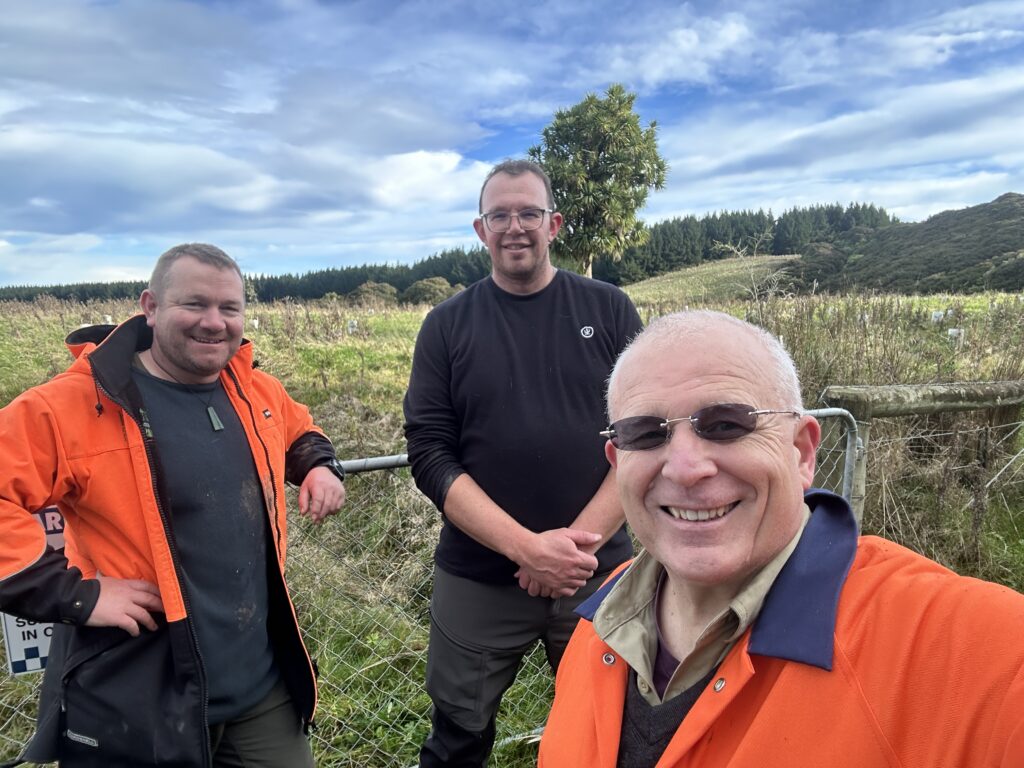
Habitat Restorations Aotearoa‘s Glen Riley introduced me to Ciaran Campbell, a scientist at the Otago Regional Council. We all met at Kauri Trees in June 2025 and extracted samples from the stream for DNA analysis.
What is Environmental DNA (eDNA)?
Environmental DNA (eDNA) is genetic material that is shed by organisms as they move in, through, and around their environment. By sampling the water and isolating the genetic material, we can gain valuable insights into the distribution of flora and fauna through time and space, more sensitively monitor biosecurity threats, and better understand and track fluctuations in ecosystem health.
My property is at the top of a range of hills. In the steep valley of virgin indigenous forest are the headwaters of a stream that runs eastward, through my neighbours’ properties, eventually making its way to Akatore Creek and out to sea. The stream is therefore free from any upstream contaminants. Samples taken from the stream should correctly identify flora and fauna on my property.
We drew 50 ml of water from the stream into a syringe, then pushed it out through a filter, trapping the DNA held in suspension. This process was repeated up to 20 times, giving us one litre of sampled water. The filter was then sealed in a bag for laboratory analysis. In all, we prepared 6 separate samples.
The material in the water blocked the filter, making it difficult to empty the syringe. This meant that some samples were less than one litre, but enough for analysis.
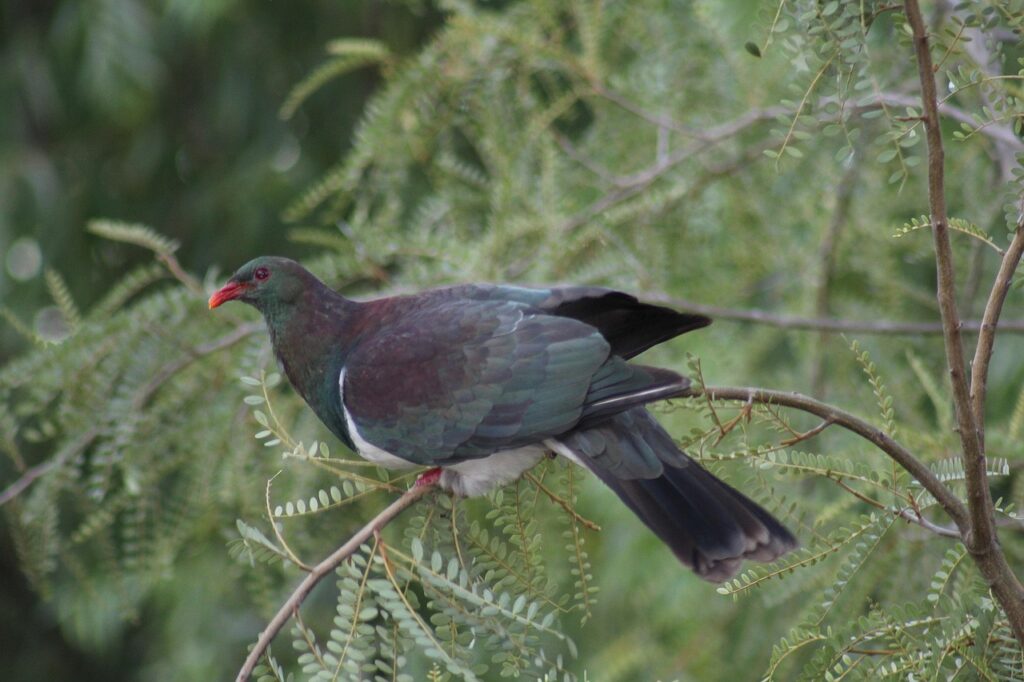
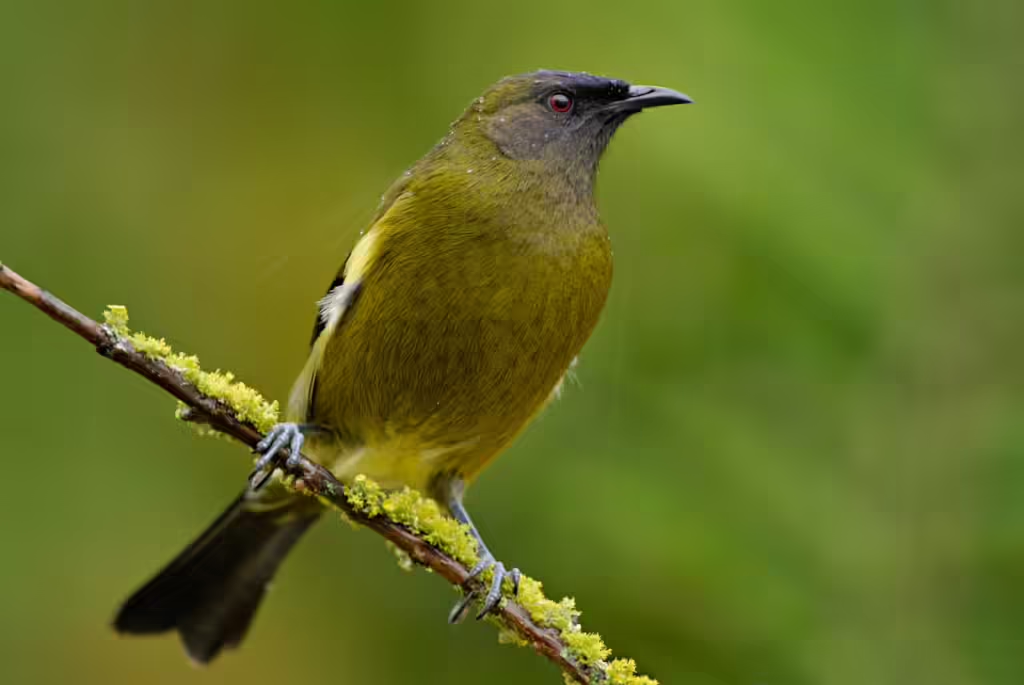
Two bird species, bellbird/korimako (Anthornis melanura) and wood pidgeon/kererū (Hemiphaga novaeseelandiae) DNA was present in the water samples. I’m surprised that these were the only birds detected because there are plenty of Fantales and Tui in the forest.
Four species of crustaceans were detected, including the freshwater crayfish, kōura (Paranephrops zealandicus), which is “At Risk – Declining” in the national threat classification.
Twenty insect species were identified. These included caddisflies, stoneflies, and mayflies, which are generally indicative of freshwater ecosystem health, as taxa within these Orders are typically not very tolerant of instream contaminants including sediment.
On the downside, eight mammals were detected, including black rats (Rattus rattus), possums (Trichosurus vulpecula), fallow deer (Dama dama), cattle (Bos taurus), sheep (Ovis aries), cats (Felis catus), and rabbits (Oryctolagus cuniculus).
I know cattle from my southern neighbour have recently been browsing over my property. I suspect they entered through unclosed gates. This is not something I can properly control until I install deer fencing along Akatore Creek Road.
eDNA sampling detected a total of 35 plant species, many of these are natives.
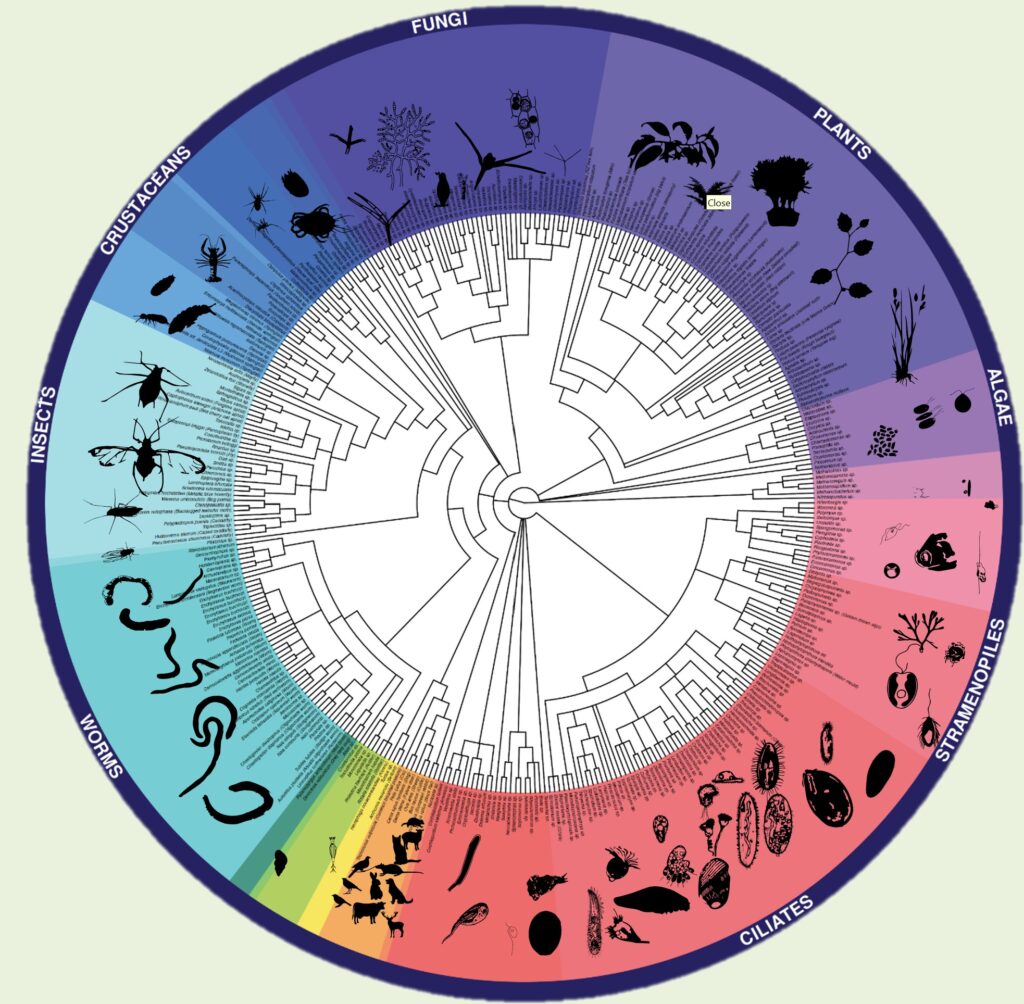
eDNA sampling detected a total of 71 other species (who’d have guessed?), including amoebae, ciliates, cnidarians, flatworms, algae, liverworts, molluscs, mosses, oomycetes, millipedes, rotifers, spiders, springtails, and worms. The diversity of these detections is a positive reflection on the state of the stream.
18 July 2025