Scion Research Tree Measurement Project
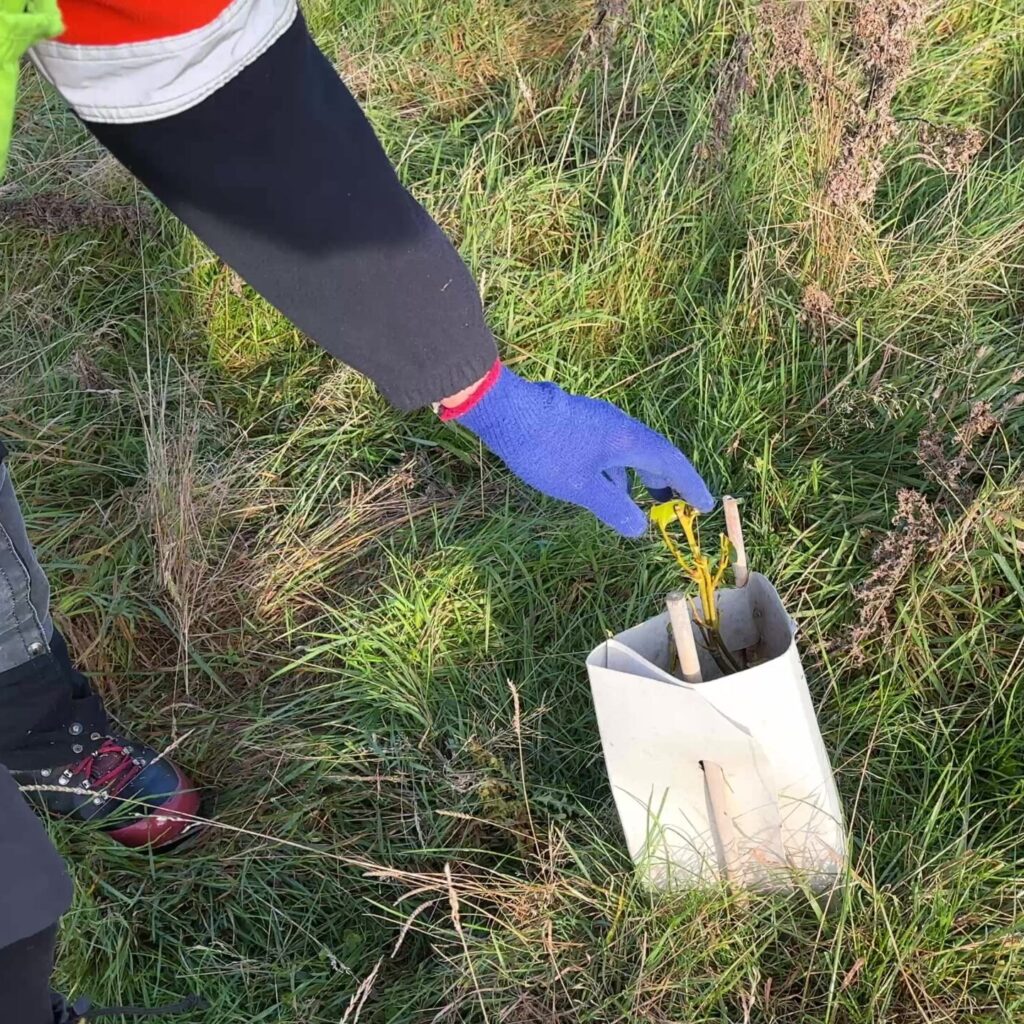
I was very pleased to show Simeon Smaill and Dejan Firm from Scion Research over the property in October 2024. They expressed interest in undertaking a long-term study into the results of my planting approach. This included the supply of larger trees in 1 litre pots from Ribbonwood Nurseries, and the planting approach taken by Habitat Restorations (using woollen mats and tree guards). You can see that YouTube video here.
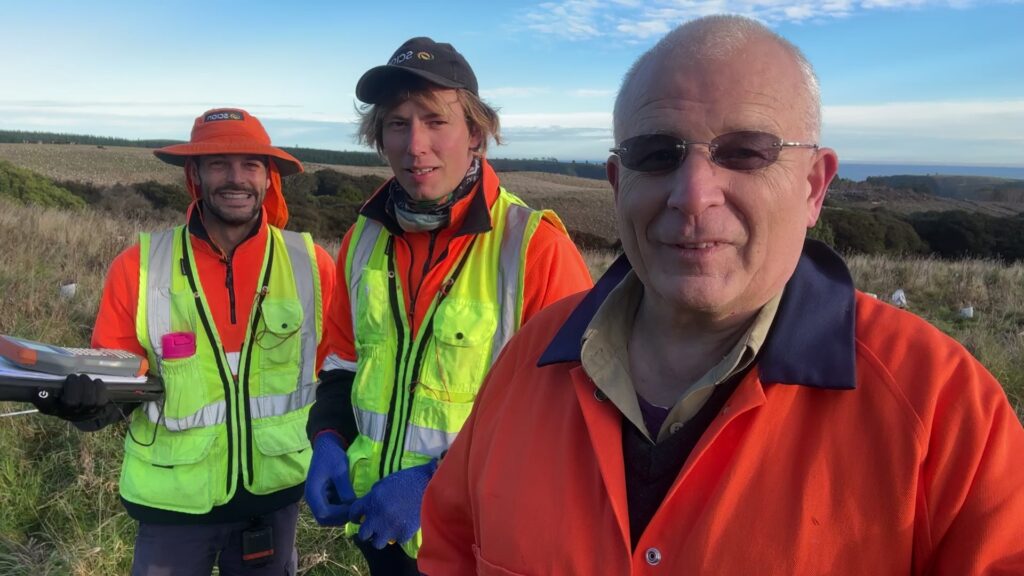
Two forestry technicians, Ryan Vorster and Pedro Capelino arrived in mid June 2025 to commence the tree measurement project. The purpose of the project is to assess my planting approach, in terms of both cost and performance.
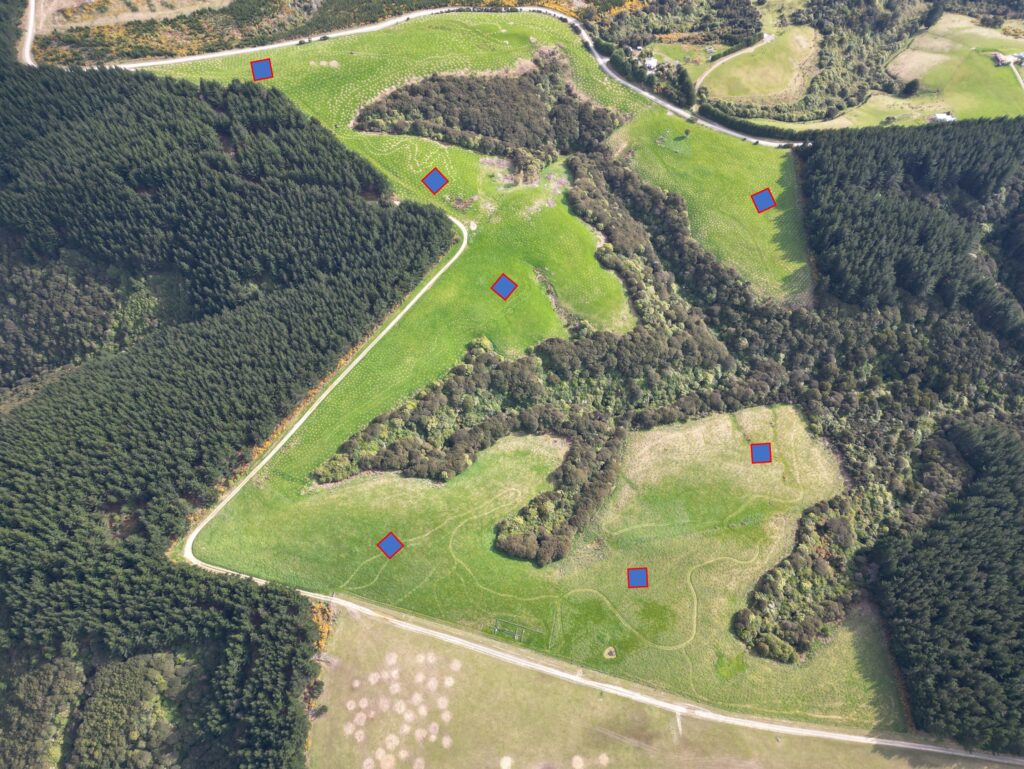
This first visit required the establishment of (30 x 30) m plots. Normal measurement plots are (20 x 20) m but given my 3 m nurse tree spacing, my ploy size was increased to sample approximately 100 trees per plot.
Ryan had prepared draft locations for the measurement plots, which were adjusted once he saw the site and orientation of the slopes. The adjustments meant that we were sampling from areas that are oriented differently. For example:
- The plot in the north-east corner is in a flat depression, that gets quite wet in the winter. It sees little winter sun.
- The plot in the south-east is on a north facing slope, with plenty of sun throughout the year.
- The plot near Akatore Creek Road is on the east-sloping hill. It doesn’t get much late afternoon sun.
Seven plot locations were identified at each corner with white square marking pegs.
Now I have four types of pegs on the property: Red for the walking track; white rectangular land/road boundary markers; white square (driven down to just above the soil level) survey pegs; and tall white square measurement plot corner stakes.
Each measurement plot was further divided into sixteen (7.5 x 7.5) m squares for data subsets.
Over 4 days, Ryan and Pedro recorded species names, height, and qualitative condition statements. Because I used tree guards, dead plants can be seen and recorded during this first measurement round. The condition observations included browsing by animals (eg Broadleaf) and insects (eg Wineberry).
I asked about how the project will change when the kauri trees are planted in 2026, and they said it would not make any difference to the project, though the number of records in each measurement plot will double. I guess it is little different to any other trees that might sprout up over the project period due to natural seeding.
I’m very excited about the commencement of this project. It enables measurement of both the nurse trees and the kauri. I don’t know how long the project will run for, but formally recording the transition from pasture, to forest, to (hopefully) kauri dominance using systematic and scientific methods, is something that I cannot do myself.
The video of the Scion visit is KT026, which can be viewed here on the Kauri Trees YouTube channel.
20 July 2024